Disaster Response and Poison Control Centers with Dr. Peter Akpunonu
Podcast: Play in new window | Download
Subscribe: Apple Podcasts | RSS | More
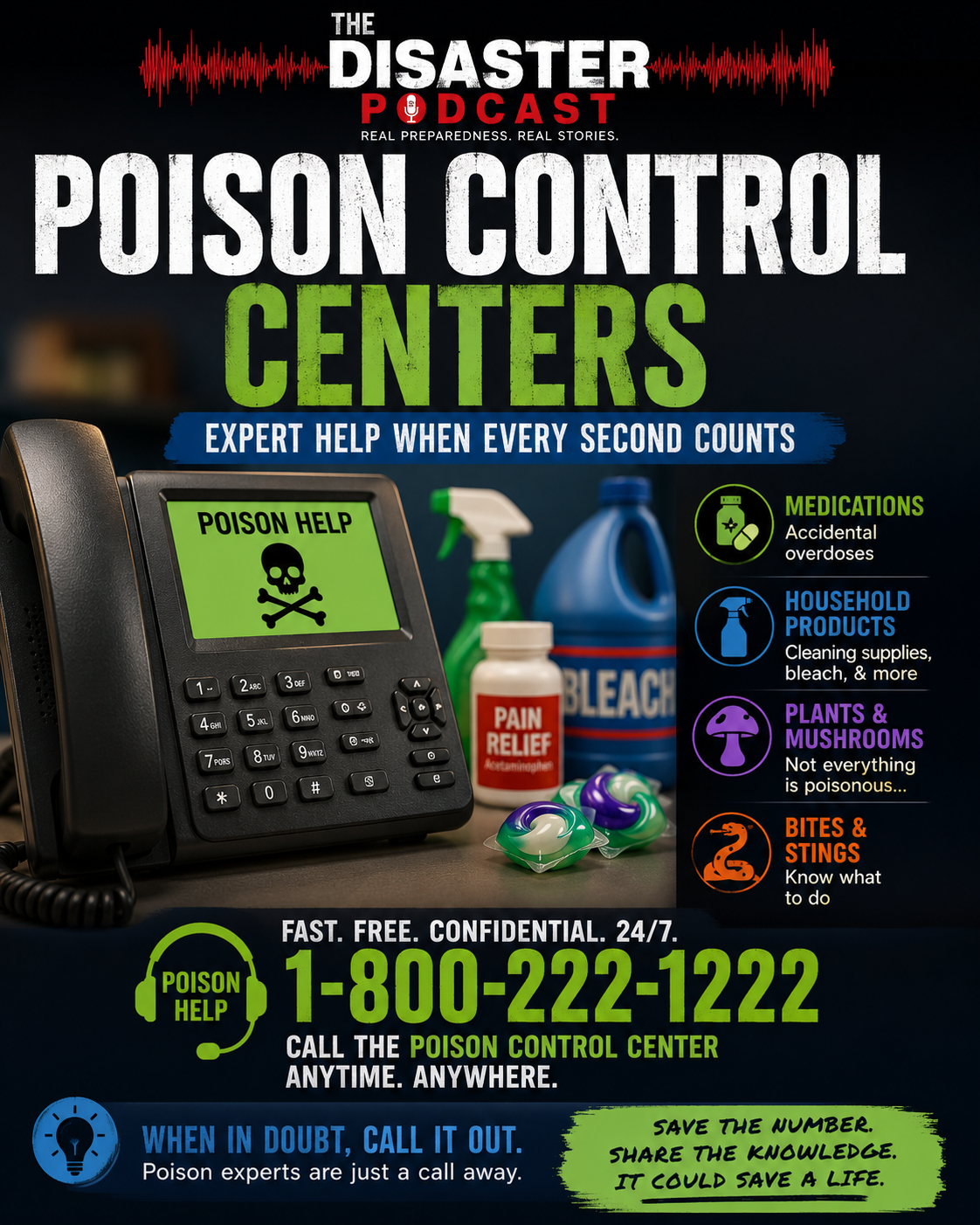 ER Doctor and toxicologist Peter Akpunonu from the Kentucky Poison Control Center joins us on the show this week. He’s also joined by Tim Conley from MedGlobal. We talk about the unique challenges seen during disasters when there is a need to contact poison control centers. Poison Centers are 24/7/365 emergency hotlines. 70% of the people who call poison control centers are able to be managed and advised so they can remain at home. This results in a huge savings in needless healthcare costs.
Previous Disaster Podcast Episode on Med Global with Tim Conley
The episode was co-hosted by Sam Bradley and Jamie Davis.
Scroll down for Podcast Discussion Summary
 Thank you as always to Paragon Medical Education Group for their long-term support of the Disaster Podcast. Dr. Joe Holley and the team at Paragon continue to provide excellent and customized disaster response training to jurisdictions around the U.S. and internationally as well.
Podcast Discussion Summary
Disaster Podcast Episode Planning
Jamie and Sam welcomed Peter Akapanu, an ER doctor and toxicologist who runs Kentucky’s Poison Control Center, as a guest. The conversation briefly touched on weather conditions in different regions and introduced Tim Conley, from MedGlobal.
Poison Control Center Functions
Peter discussed common unintentional poisonings, including children accessing medications at home and seasonal mushroom and plant exposures. He explained that poison control centers serve as a 24/7 medical lifeline staffed by toxicologists, pharmacists, and nurses who provide treatment recommendations to keep people out of emergency rooms and save healthcare costs. Peter highlighted the centers’ capabilities in disaster scenarios, where they can scale operations and assist first responders with triage and guidance.
Poison Control Protocols for First Responders
The discussion focused on poison control procedures and protocols for first responders. Peter explained that while he can provide guidance and recommendations, he cannot give medical orders, and emphasized that field providers should first treat the patient in front of them with symptomatic and supportive care.
Jamie shared that in Maryland, the poison center is integrated into the med radio system and can be accessed alongside medical direction, though they cannot issue orders either. The conversation highlighted how toxicologists like Peter can provide valuable guidance over the phone, including information about chemical properties, severe effects, and necessary protections, though they must communicate one step at a time and focus on basic recommendations.
Poisoning Situations and Provider Awareness
Sam and Peter discussed the importance of field providers gaining information about potential poisoning situations to take appropriate precautions. They shared experiences about unknown toxic exposures, including Sam’s story about a patient who had ingested Jimson weed. Peter emphasized the need for providers to maintain situational awareness and trust their instincts when dealing with altered mental status cases, suggesting that poison control should be considered early in the differential diagnosis process.
Poison Treatment and Response Strategies
The group discussed what responders have available in ambulances for treating poisonings, with Peter confirming that most necessary treatments involve medications already carried by emergency services. Sam and Peter discussed how toxicologists use the principle that “the difference between poison and cure is a dose” when treating various poisonings. Jamie shifted the discussion to how poison centers adapt their response during major disasters like hurricanes, flooding, or chemical releases, though this portion of the conversation was cut off in the transcript.
Poison Centers in Disaster Response
Peter explained how poison centers operate as 24/7 public health services that report data to the National Poison Data System every 7 minutes, which helps identify patterns and anomalies across the country. He described the collaborative network of poison centers that can provide mutual assistance during large events or disasters, with centers able to track and follow up on cases across different states.
Peter also detailed specific disaster-related issues, noting that while tornadoes cause trauma concerns, poison center problems typically arise from utility disruptions leading to carbon monoxide exposures from generators and potential mold issues after floods.
Poison Center Emergency Support Role
Peter explained that while poison centers don’t typically handle disasters directly, they can provide essential support during emergencies like sewage line disruptions, floods, and snake bites. He described how poison centers can help determine treatment needs, provide antidote guidance, and coordinate with hospitals across the state 24/7.
Peter also clarified that the national hotline number 1-800-222-1222 routes calls to local poison centers based on area codes, and during overwhelming situations, calls can be automatically routed to other states through their IT infrastructure.
Poisoning Prevention Advice Meeting
The meeting focused on preventing poisonings, with Peter providing general advice including keeping cleaning supplies locked up, properly labeled, and out of reach of children, and using pill minders effectively. The group discussed where listeners could find them online, with Peter providing his email address and Tim mentioning his new position with MedGlobal.
Wrap up and updates
The team went through contact information and the team encouraged listeners to stay safe. The group discussed the role of specialized training, with Jamie highlighting the sponsorship of the Disaster Podcast by Paragon Medical Education Group.
Catch the full episode using the player above or on your favorite podcast platform, and don’t forget to subscribe to the Disaster Podcast for weekly insights from leaders in disaster response and research!