Disaster Trauma and Mental Health with Sonnet Daymont
Podcast: Play in new window | Download
Subscribe: Apple Podcasts | RSS | More
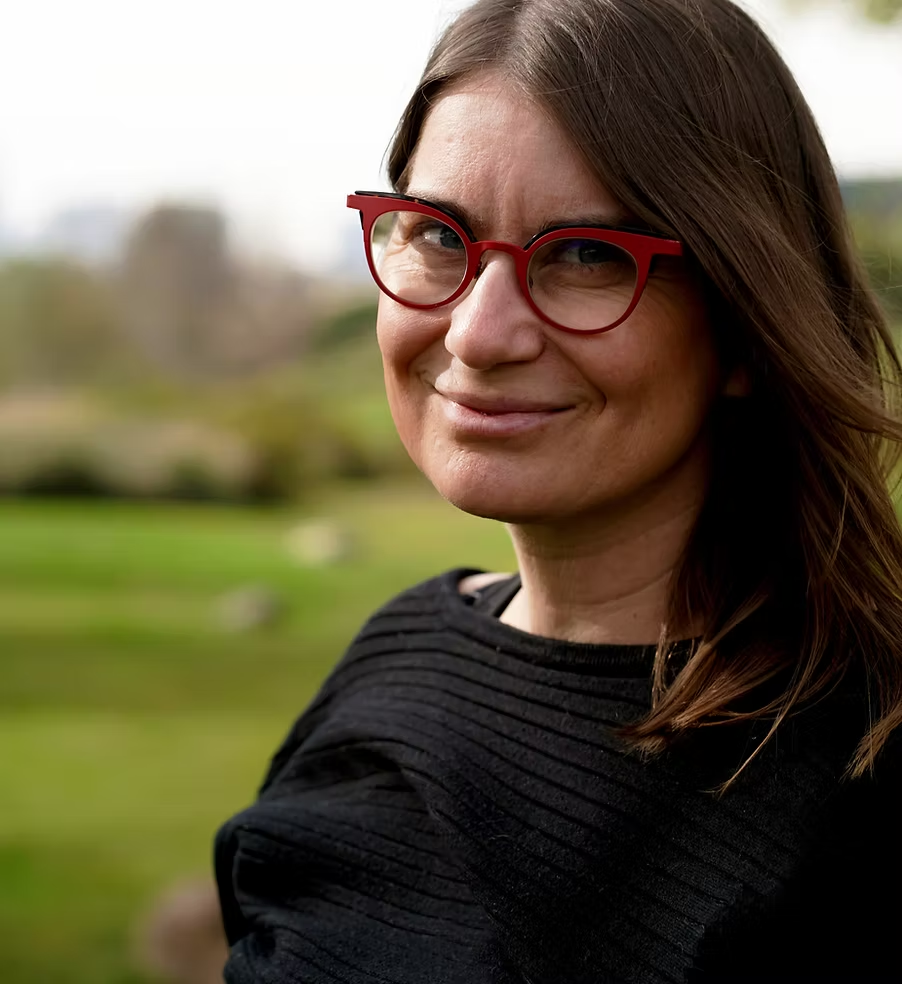 Sonnet Daymont, clinical therapist, joins the show this week with a look at the treatment and management of mental health trauma in both victims and responders following a major event. Her experiences following devastating wild fires in the Los Angeles area in January of 2025 help her define the needs of individuals in the short and long term.
Dr. Joe Holley from Paragon Medical Education Group and Becky DePodwin, our disaster emergency management expert joined the discussion as well. The episode is co-hosted by Sam Bradley and Jamie Davis.
Scroll down for Podcast Discussion Summary
 Thank you as always to Paragon Medical Education Group for their long-term support of the Disaster Podcast. Dr. Joe Holley and the team at Paragon continue to provide excellent and customized disaster response training to jurisdictions around the U.S. and internationally as well.
Podcast Discussion Summary
Disaster Podcast Planning Meeting
The team introduced themselves and discussed upcoming topics for the Disaster Podcast. Sam mentioned moving to Missouri and plans to build a tornado shelter in his garage. Becky advised keeping an eye on the severe weather forecast during the move. The group then introduced their guest for the episode, trauma expert Sonnet Daymont, who is a licensed marriage and family therapist and consultant on films. They discussed her background and her upcoming book “When Dangerous Feels Like Home,” a true crime memoir about healing from trauma.
Sonnet’s Trauma Therapy Memoir Discussion
The discussion focused on Sonnet’s background as a licensed marriage and family therapist specializing in trauma treatment. She explained her upcoming book “When Dangerous Feels Like Home,” which is a true crime-inflected memoir about her journey to becoming a therapist through experiencing relational trauma. The conversation also touched on Sonnet’s work in the film industry, including consulting on a horror film about child abuse titled “Women in the Yard.” When asked about red flags for narcissistic personality traits, she began explaining how these traits relate to antisocial personality disorder and the challenges they present in relationships, though the transcript ended before she could complete her answer.
Narcissistic Behavior Identification Discussion
Sonnet advised that identifying narcissistic behavior involves paying attention to genuine empathy and listening carefully to others. They explained that while some behaviors like love bombing and grandiosity can be normal early in relationships, pathological versions might indicate manipulative or harmful intentions. Sonnet also clarified that mental health disorders like narcissism lack biomarkers and diagnostic criteria change over time, while explaining that Machiavellianism describes manipulative and cunning behavior lacking empathy.
Psychological Disorders and Resilience
The group discussed psychological disorders, focusing on the differences between psychopathy and antisocial personality disorder as defined in the DSM. Sonnet explained that while these conditions share some traits like low empathy, they represent distinct diagnostic categories, and individuals can exhibit multiple disorders simultaneously. Becky raised questions about nature versus nurture in personality development, to which Sonnet responded that brain scans show differences in people with reduced empathy or antisocial behavior, though the cause could be either genetic or environmental factors. The conversation then shifted to trauma and resilience, with Sonnet sharing insights about how supportive caregivers or mentors can help individuals process trauma constructively rather than developing problematic behaviors. Jamie introduced a new topic about disaster resilience, asking about preparation methods for people living in disaster-prone areas, but the transcript ended before this question was addressed.
Disaster Responder Mental Health Strategies
The meeting focused on discussing self-care and mental health strategies for disaster responders and survivors. Sonnet explained key components of cognitive behavioral therapy (CBT), including mindful awareness, thought restructuring, and exposure therapy, as effective tools for managing trauma and anxiety. The discussion highlighted how community support and social connections are crucial during disasters, with examples from recent wildfires in Los Angeles. The group agreed to bring back Sonnet for future discussions on mental health topics, particularly focusing on meteorologists’ experiences with disaster forecasting and its impact on their mental well-being.
Wrap up and updates
The team went through contact information and the team encouraged listeners to stay safe. The group discussed the role of specialized training, with Jamie highlighting the sponsorship of the Disaster Podcast by Paragon Medical Education Group.
Catch the full episode using the player above or on your favorite podcast platform, and don’t forget to subscribe to the Disaster Podcast for weekly insights from leaders in disaster response and research!


Recent Comments