Crisis Communications: Building Trust Before Disaster Strikes with Joshua Altman
Podcast: Play in new window | Download
Subscribe: Apple Podcasts | RSS | More
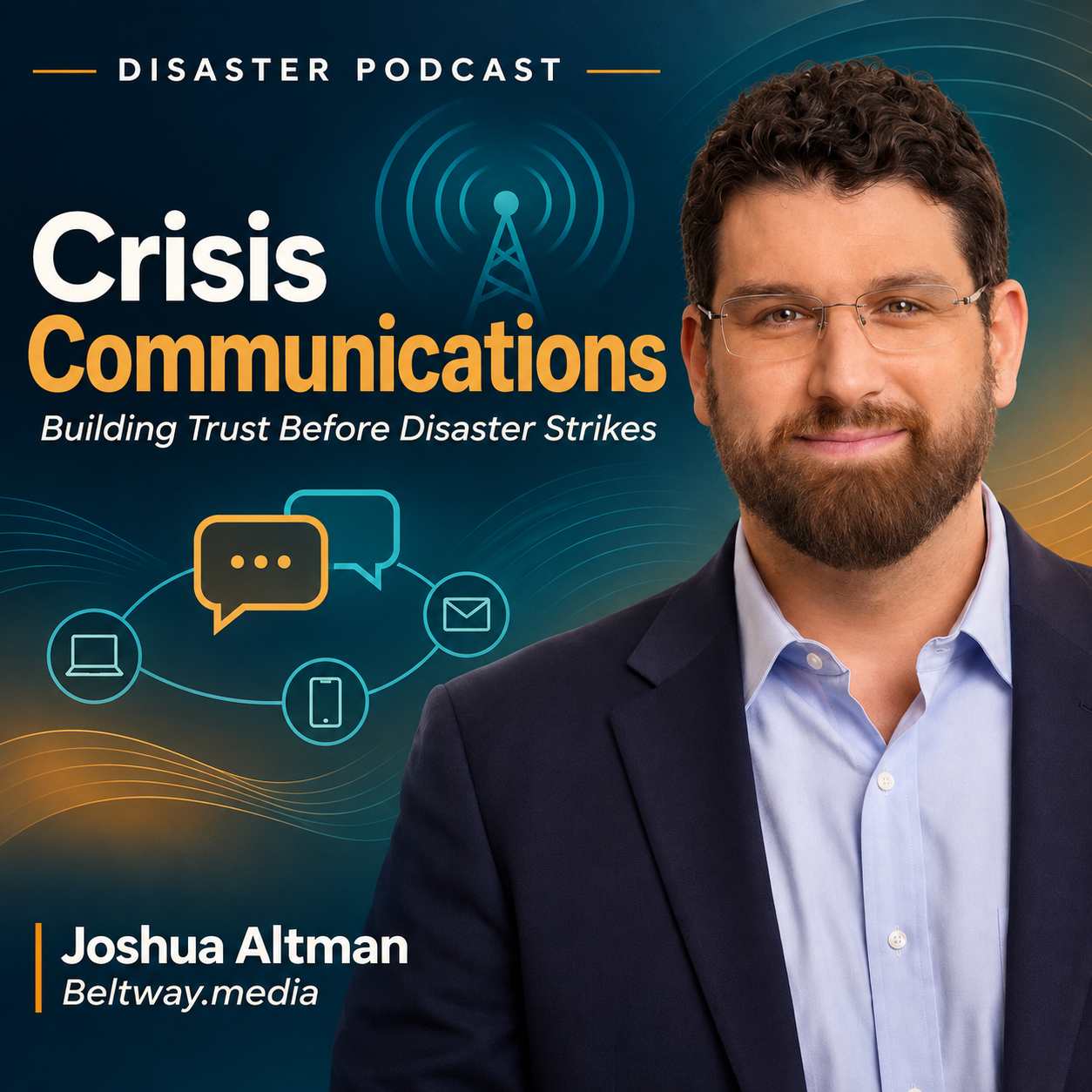 When power fails, phone batteries run low, and familiar information channels become unreliable, how do you reach the people who need to hear from you? This week on the Disaster Podcast, hosts Jamie Davis and Sam Bradley welcome Joshua Altman, managing director at Beltway.media, to discuss communicating clearly before, during, and after a disaster.
Joshua shares his background in journalism and his work providing communications leadership to small and medium-sized businesses. He brings that experience to a challenge familiar to emergency managers: getting accurate, useful information to people whose circumstances may be changing by the minute.
A Crisis Communications Approach
The conversation centers on Joshua’s four-language approach to communication: read, see, hear, and experience. Written updates, visual information, and spoken messages each offer ways to reach an audience. The experience component adds another consideration—what people are actually living through as they receive the message.
During a disaster, that experience may include uncertainty, limited access to devices, or difficulty keeping equipment charged. Joshua encourages communicators to consider those conditions when deciding what to say and how to deliver it. A carefully written online update has limited value to someone who cannot get online.
Multi-Channel Disaster Communications
Jamie, Sam, and Joshua explore the importance of using multiple channels, including offline methods, while keeping the core message consistent. Different platforms may require different formats, but people should be able to understand the same essential information wherever they encounter it.
Preparation helps make that possible. Joshua discusses developing messages and communication processes ahead of an emergency, then adapting them as conditions change. He also recommends assigning clear responsibility for finalizing messages so updates remain coordinated across channels.
Building Public Trust Before Disasters
Public trust is another central theme. Joshua emphasizes that organizations build credibility through regular, accurate communication long before a major event. He cautions against overstating threats and discusses the importance of matching the message to what the audience needs at that moment. That ongoing relationship can influence whether people pay attention when an urgent warning arrives.
The team also considers how organizations can keep pace with changing communication habits. Joshua recommends listening to the community and learning which channels people actually use. A communication plan needs periodic attention as platforms, preferences, and access change.
AI Tools and Crisis Communications
Artificial intelligence enters the discussion as a potential tool for research and information synthesis. Joshua distinguishes those supporting uses from handing over responsibility for public messages. Human review and clear ownership remain important when information must be accurate, consistent, and appropriate to a rapidly developing situation.
Throughout the episode, the conversation returns to practical questions: Who needs this information? Can they access it? Does it make sense in their circumstances? And who is responsible for making sure the message stays clear?
Listen as Jamie, Sam, and Joshua explore how preparation, coordination, and everyday credibility support effective disaster communications. The team also looks ahead to future conversations about getting people to listen to emergency messages and communicating during cybersecurity incidents.
Learn more about Joshua’s work and communications resources at Beltway.media.
Our thanks to Dr. Joe Holley from Paragon Medical Education Group for sponsoring the Disaster Podcast.
 Thank you as always to Paragon Medical Education Group for their long-term support of the Disaster Podcast. Dr. Joe Holley and the team at Paragon continue to provide excellent and customized disaster response training to jurisdictions around the U.S. and internationally as well.